
The Escalation Paradox
In this guide on AI to human handoff, the goal of an AI voice agent is to handle as many calls as possible without human involvement, but the irony is that the quality of its escalation behavior matters more than the quality of its autonomous handling. When the AI resolves a call successfully, the caller is satisfied and moves on – they may not even realize they were speaking with AI. But when the AI handles an escalation poorly – fumbling the transfer, losing context, escalating too late after the caller is already frustrated, or failing to escalate when it clearly should have – the experience is worse than if the caller had reached a human in the first place. A caller who spent three minutes explaining their problem to an AI and then has to repeat the entire explanation to a human agent is angrier than a caller who waited thirty seconds on hold and went straight to a human. Designing smart escalation flows is therefore not a secondary concern – it is a primary design challenge that directly determines whether your AI deployment improves or worsens customer experience.
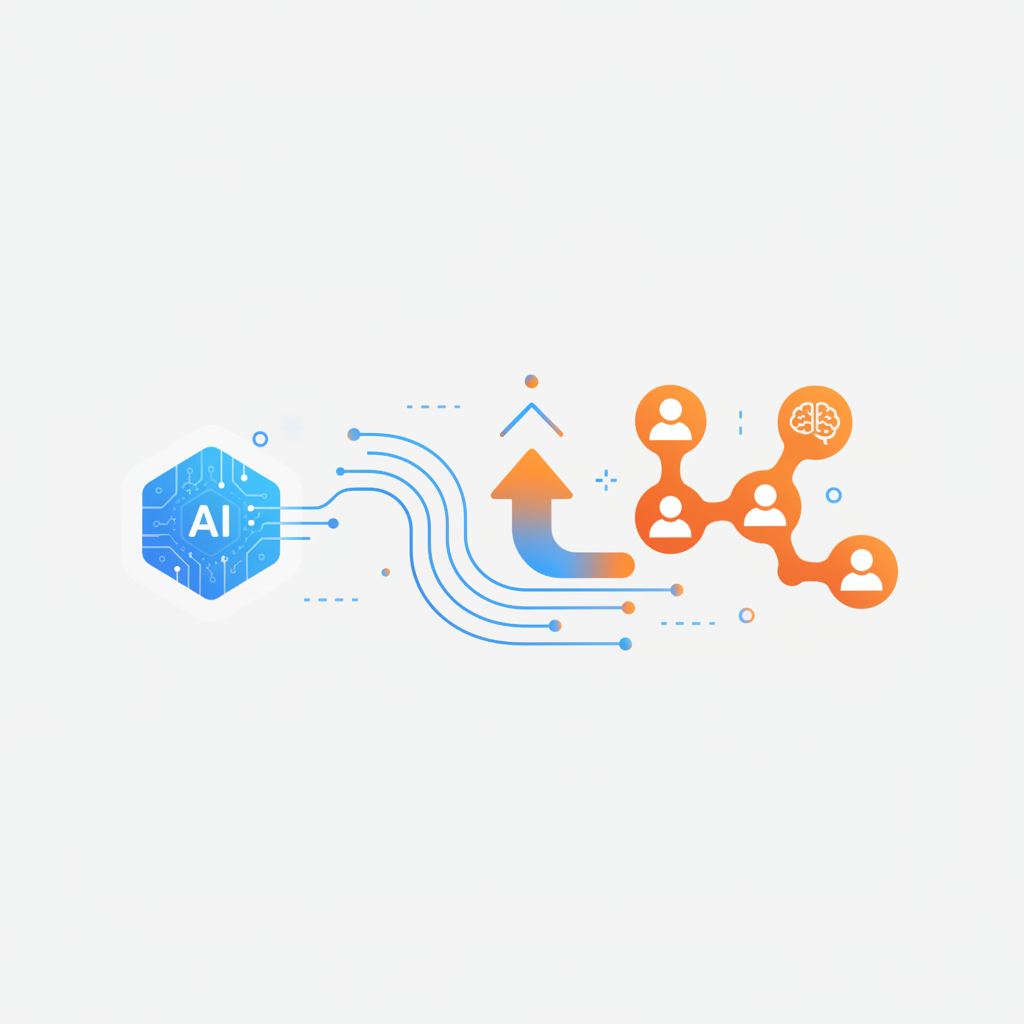
The fundamental question every escalation design must answer is: how does the AI know when it is out of its depth? This is harder than it sounds because the AI does not experience confusion the way a human does. A human agent who does not understand a caller’s request knows they are confused and can ask for clarification or seek help. An AI that encounters something outside its training data will typically generate a response anyway – it might hallucinate an answer, give a generic non-response, or go in a direction that makes the caller more frustrated. The escalation logic must catch these situations proactively rather than waiting for the caller to become visibly upset, which means building triggers based on confidence scores, conversation patterns, and explicit keywords rather than relying on the AI’s self-awareness.
When to Escalate: The Trigger Framework
Effective escalation triggers fall into several categories, each requiring a different detection mechanism and response. The most straightforward triggers are explicit requests – when a caller says “let me speak to a human,” “transfer me to a manager,” or “I want to talk to a real person.” These should always result in immediate escalation with no argument or delay. The AI should not try to convince the caller that it can handle the request, should not ask the caller to try one more time, and should not put up any resistance whatsoever. Attempting to retain a caller who has explicitly requested a human is one of the fastest ways to turn a neutral experience into a negative one.
Emotional triggers require more sophisticated detection. When a caller becomes audibly frustrated, angry, or distressed, the conversation has moved beyond the transactional territory where AI excels into emotional territory where human empathy is essential. Modern voice AI platforms can detect emotional states through a combination of signals: elevated speech volume, faster speaking rate, certain word patterns (“this is ridiculous,” “I’ve been trying for weeks,” “nobody can help me”), and sentiment analysis of the transcript. When emotional distress is detected above a threshold, the AI should acknowledge the caller’s frustration, express empathy, and initiate a warm transfer to a human agent. The acknowledgment is important – a transfer that happens without the AI addressing the caller’s emotional state feels abrupt and dismissive, as if the AI is dumping a problem caller rather than helping.
Complexity triggers fire when the AI recognizes that a request exceeds its capability. This might be a multi-part request that involves exceptions to standard policies, a scenario that requires creative problem-solving, or a question that the knowledge base does not cover. The AI should detect these situations based on low confidence scores in its responses, repeated clarification attempts that are not resolving the ambiguity, or specific topic categories that have been explicitly marked for human handling. Financial negotiations, legal questions, medical advice, complaint resolution involving compensation, and any interaction where the outcome has significant financial or safety implications should have lower escalation thresholds than routine inquiries.
How to Transfer: Preserving Context and Dignity
The technical execution of the transfer is where many AI deployments fail even when the trigger logic is correct. A cold transfer – where the AI simply routes the call to a human agent with no context – creates the dreaded “please repeat everything you just told the AI” experience that is worse than no AI at all. A warm transfer, by contrast, involves the AI providing the human agent with a complete summary of the conversation before connecting the caller. This summary should include the caller’s identity (if provided), the reason for their call, what information has been gathered, what the AI attempted, and why it is escalating. The human agent reads this summary in seconds and can pick up the conversation from where the AI left off, creating a seamless experience for the caller.
The best implementations go further than a text summary. Kolivri passes the full conversation transcript, structured data from any forms or qualification steps completed, and a recommended action for the human agent based on the AI’s analysis of the situation. Cresta provides real-time agent assist that continues helping the human agent after the transfer, offering suggestions based on the conversation history. Assembled manages the routing logic to ensure escalated calls reach agents with the right skills and availability, minimizing the chance of a second transfer. The goal is to make the escalation feel like a team handoff rather than a system failure – the caller should feel that the human agent is better equipped to help them, not that the AI gave up.
One critical design principle that many organizations miss is the bidirectional nature of optimal escalation. It is not enough to transfer calls from AI to human – there should also be a mechanism for human agents to transfer routine follow-up back to the AI. If a human agent resolves a complaint but the caller then has a routine question about scheduling their next appointment, the agent should be able to hand the caller back to the AI for that portion of the interaction rather than spending three minutes on something the AI handles in sixty seconds. This bidirectional flow maximizes the use of both human and AI resources, ensuring that human time is spent on tasks that require human skills and AI time is spent on tasks that benefit from AI’s speed and consistency.
Related Reading
- מדריך מקיף לשילוב סוכן קולי AI עם מערכת CRM
- Mastering AI Voice Agent CRM Integration: A Comprehensive Guide
- מהפכה בבקרת איכות במוקדים טלפוניים בעזרת בינה מלאכותית

