
An Industry Ripe for Transformation
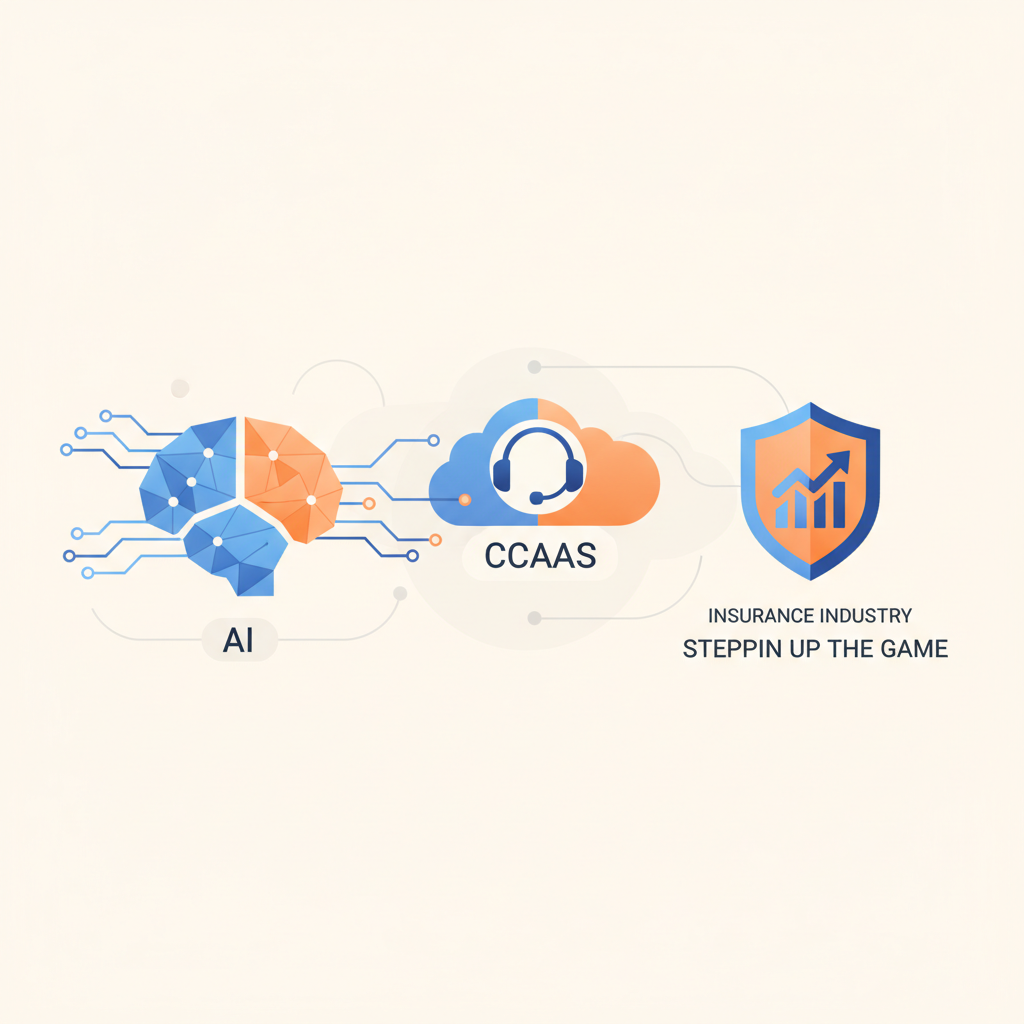
In this guide on AI CCaaS insurance industry, the insurance industry has always been defined by its relationship with risk, yet when it comes to adopting new technology, it has historically been among the most risk-averse sectors in the economy. While fintech companies disrupted banking, e-commerce transformed retail, and telemedicine reshaped healthcare access, insurance companies continued to operate largely the way they had for decades – paper-heavy, process-heavy, and phone-heavy. But the convergence of two technologies is changing this calculus rapidly: artificial intelligence and Contact Center as a Service. Together, they address the specific pain points that have made insurance operations expensive, slow, and frequently frustrating for both customers and employees. The companies that are embracing this convergence are discovering that AI and CCaaS do not just reduce costs – they fundamentally improve the customer experience in an industry where customer experience has traditionally been an afterthought.
The insurance industry’s phone dependency is extraordinary even by the standards of phone-intensive businesses. A mid-size insurance agency might handle hundreds of calls daily spanning an enormous range of complexity: simple questions about payment due dates, complex claims involving multiple parties and evolving circumstances, sensitive conversations about coverage denials, technical discussions about policy terms that require licensed expertise, and time-sensitive situations where a customer is standing next to a wrecked car or in a flooded basement. The diversity and emotional intensity of these calls makes insurance one of the most challenging environments for customer service, and it explains why insurance companies spend more per customer on service operations than almost any other industry. It also explains why AI and CCaaS, properly deployed, can have such transformative impact – there is enormous room for improvement.
Claims: Where AI Makes the Biggest Difference
The claims process is the moment of truth for any insurance company – the event that determines whether the customer’s years of premium payments feel justified or wasted. It is also the most operationally expensive and complex process in insurance, involving initial notification, investigation, documentation, evaluation, negotiation, and settlement across timeframes that range from days to years. The first step, First Notice of Loss, is where AI voice agents deliver the most immediate impact. When a policyholder calls to report an incident, the AI guides them through a structured information-gathering process that captures all the details needed to initiate the claim: what happened, when, where, who was involved, what damage occurred, whether there are injuries, whether authorities were contacted, and the policyholder’s coverage and contact information. This structured intake, conducted consistently every time regardless of call volume or time of day, ensures that claims begin with complete information rather than the fragmentary details that human agents often collect when they are rushed or distracted.
Beyond FNOL, AI agents handle the ongoing status inquiries that consume enormous agent bandwidth during the life of a claim. Once a claim is filed, policyholders naturally want to know what is happening – has the adjuster been assigned, when will they visit, has the estimate been completed, when will payment be issued? These status calls account for a large percentage of claims-related phone volume, and each one requires a human agent to look up the claim, review the current status, and relay it to the caller. An AI agent connected to the claims management system handles these inquiries instantly, providing accurate, real-time status information without any human involvement. This frees claims adjusters and service agents to focus on the substantive work of investigating, evaluating, and settling claims rather than answering the phone to read status updates.
The CCaaS Foundation
AI voice agents do not operate in isolation – they require a robust communication infrastructure to function effectively, and this is where CCaaS comes in. Cloud-based contact center platforms provide the telephony, routing, recording, analytics, and workforce management capabilities that support both AI and human interactions. For insurance companies, the CCaaS foundation is particularly important because of regulatory requirements: calls must be recorded and retained, customer data must be handled in compliance with state and federal regulations, agents must be properly licensed for the types of advice they provide, and audit trails must be maintained for every interaction. Modern CCaaS platforms build these compliance capabilities into their infrastructure, ensuring that both AI-handled and human-handled interactions meet regulatory requirements automatically.
The combination of AI and CCaaS creates capabilities that neither technology delivers alone. CCaaS provides the routing intelligence to direct each call to the right handler – whether that is an AI agent for routine inquiries, a licensed agent for coverage advice, a claims specialist for complex situations, or a supervisor for escalated complaints. AI provides the automation that handles routine interactions without human involvement and the assistance that makes human agents more effective when they are needed. Analytics that span both AI and human interactions provide a complete picture of customer experience, operational efficiency, and compliance adherence. And the cloud-based infrastructure of CCaaS means that all of this scales elastically with demand – during a catastrophic weather event that generates thousands of claims calls, the system scales to handle the surge without the busy signals and hours-long hold times that characterized insurance companies’ responses to disasters in the past.
Getting Started
For insurance companies and agencies considering AI and CCaaS adoption, the practical path forward starts with identifying the highest-volume, most routine call types and deploying AI to handle them. Policy status inquiries, payment processing, claims status updates, and basic coverage questions are the typical starting points because they are high-volume, follow predictable patterns, and do not require licensed agent involvement. Once AI is handling these routine calls reliably, the scope expands to more complex interactions: FNOL intake, quote generation, renewal processing, and proactive outreach for retention. The CCaaS infrastructure should be selected with scalability and compliance in mind – ensuring that the platform meets state insurance department requirements, supports the recording and retention policies that regulators expect, and integrates with the agency management systems and carrier portals that insurance operations depend on. The companies that move first will have a measurable advantage in operational efficiency, customer satisfaction, and agent retention, while those that wait will find themselves competing with AI-enhanced competitors using tools from the previous century.
Related Reading
- ההשפעה הגוברת של ישראל בתעשיית נציגי ה-AI הקוליים והמוקדים הטלפוניים
- Israel’s Rising Influence in the AI Voice Agent and Contact Center Industry
- האצת שירות לקוחות: איך סוכני קול AI משנים סוכנויות רכב

