
Two Fundamentally Different Architectures
In this guide on AI-first contact center, there are two ways to add AI to a contact center, and the difference between them is not cosmetic – it is architectural, and it shapes everything from pricing to performance to the long-term trajectory of the platform. The first approach, taken by established CCaaS vendors like Five9, NICE CXone, Genesys, and Talkdesk, is to add AI capabilities to an existing platform that was originally designed around human agent workflows. These platforms were built over years or decades on the assumption that a human agent would handle every customer interaction, with technology serving to route calls efficiently, provide agents with information, and measure performance. AI has been layered on top of this foundation in the form of chatbots, virtual agents, real-time agent assist tools, and automated quality management. The results are impressive in many cases, but the underlying architecture still assumes humans at the center with AI as a support tool.
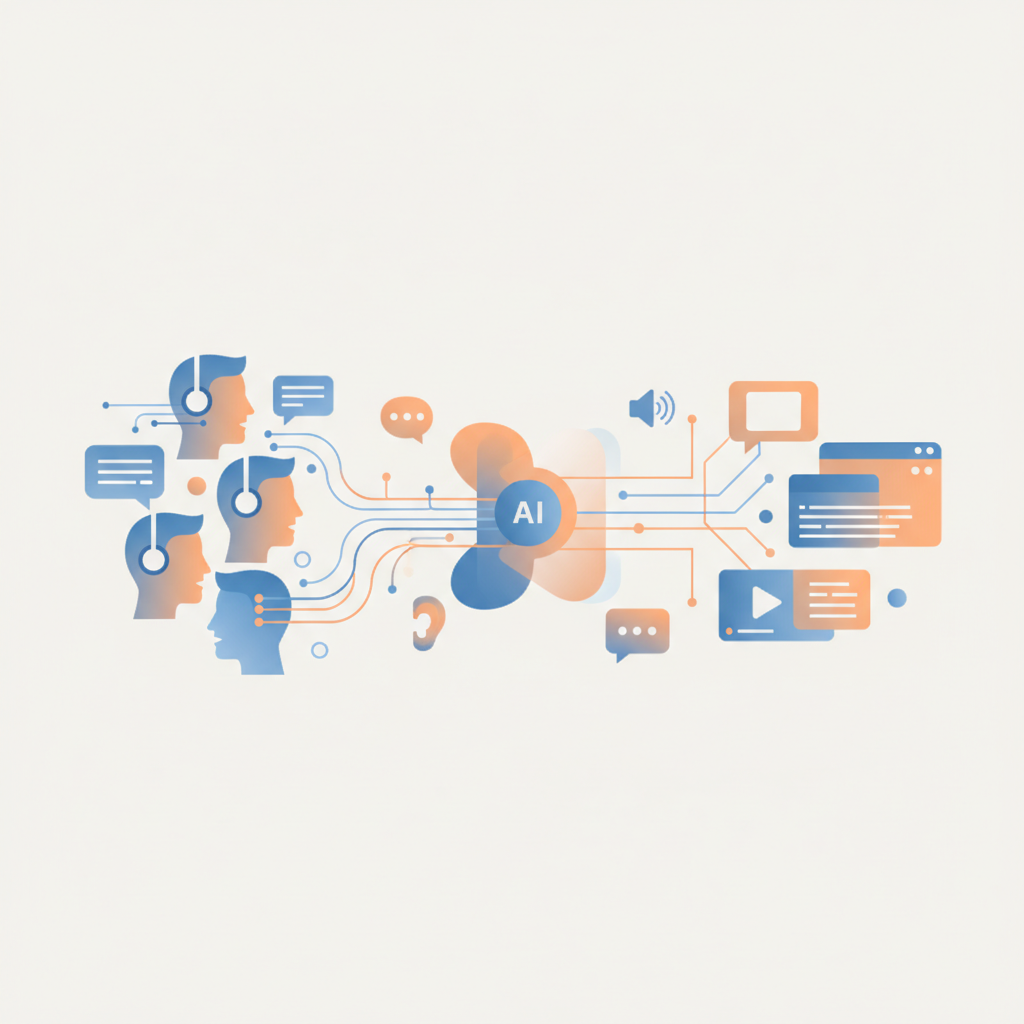
The second approach, taken by a newer generation of platforms including Kolivri, Bland AI, Replicant, and Air AI, is to build the entire contact center around AI as the primary interaction handler, with humans serving as the escalation layer for cases the AI cannot resolve. This is not a semantic distinction – it represents a fundamentally different set of design decisions. In an AI-first platform, the conversation engine is the core of the system, not an add-on. The knowledge base and retrieval system are designed for AI consumption, not human browsing. The analytics focus on AI performance metrics like containment rate and intent recognition accuracy, not just human agent metrics like average handle time. And the pricing model typically reflects the AI-centric architecture, charging per minute of AI interaction rather than per human agent seat – a model that aligns costs with actual usage rather than with headcount.
The Legacy Platform Approach
Enterprise CCaaS vendors have invested billions of dollars collectively in adding AI to their platforms, and the results are genuinely capable. Five9’s Intelligent Virtual Agent can handle complex multi-turn conversations, integrate with backend systems, and seamlessly transfer to human agents. NICE’s Enlighten AI, purpose-built for customer experience applications, provides real-time sentiment analysis, automated quality management, and conversational AI across channels. Genesys’s AI-powered predictive routing uses machine learning to match each customer with the agent most likely to achieve a positive outcome. Talkdesk’s AI suite includes virtual agents, agent copilot, real-time transcription, and automated summarization. These are not toy implementations – they are enterprise-grade capabilities deployed at scale by some of the world’s largest companies.
The limitation of the legacy approach is not in the quality of the AI features but in how they integrate with the existing architecture. Because these platforms were designed around human agent workflows, AI is always supplementary – it handles the interactions it can, and everything else flows to the same agent queue that existed before AI was introduced. The licensing model reflects this: organizations pay per agent seat regardless of how many interactions the AI handles, which means the AI reduces workload per agent but does not reduce the number of seats required unless call volume drops significantly. Implementing AI features often requires professional services engagements because the configuration interfaces were designed for routing rules and agent skills, not for AI conversation design. And the AI capabilities, while powerful, are bounded by the platform’s existing data model and integration framework, which may not expose all the information the AI needs to handle interactions autonomously.
The AI-First Approach
AI-first platforms start from the opposite premise: the AI handles the interaction, and humans are brought in only when necessary. This changes everything about how the platform is designed. The conversation engine – the AI’s ability to understand, reason, and respond – is the most critical component and receives the most engineering investment. The knowledge base is structured for rapid AI retrieval using techniques like RAG (Retrieval-Augmented Generation) and vector search, ensuring the AI can access relevant information in milliseconds. Call routing is simplified because the AI is the first responder for every call, and routing decisions happen only when escalation is needed. And the user interface centers on conversation design, knowledge management, and AI performance monitoring rather than the agent workspace and queue management tools that dominate legacy platforms.
The pricing implications of AI-first architecture are significant and often decisive for smaller organizations. Legacy platforms charge per agent seat, which means a 10-person contact center pays the same licensing fee whether each agent handles 20 calls per day or 50. AI-first platforms typically charge per minute of AI interaction or per conversation, which means costs scale directly with usage. For a business that receives 100 calls per day, most of which are routine inquiries the AI can handle, the per-minute pricing of an AI-first platform might cost $300-500 per month compared to $1,000-2,000 per month for per-seat licensing on a legacy platform – while handling a larger share of calls autonomously. For businesses with variable call volume, the usage-based model is even more attractive because there is no cost during quiet periods.
Which Approach Fits Your Organization
The choice between legacy CCaaS with AI add-ons and AI-first platforms depends primarily on your organization’s size, complexity, and current infrastructure. Large enterprises with hundreds of agents, complex routing requirements, workforce management needs, and established processes are generally better served by the enterprise platforms. These organizations need the depth of WFM, quality management, compliance, and analytics tools that legacy vendors have refined over decades, and they have the IT resources to manage the complexity. The AI capabilities of these platforms enhance an already functional operation.
Small to mid-size businesses, startups, and organizations building their customer service operations from scratch are increasingly choosing AI-first platforms. These organizations do not need the sophisticated workforce management tools designed for 500-seat contact centers, and they do not want to pay per-seat prices when AI could handle the majority of their calls. They want fast deployment, simple configuration, and pricing that aligns with their actual usage. An AI-first platform lets them start with AI handling all routine calls and add human agents only for the specific scenarios that require them – a much more efficient model than starting with a full agent roster and gradually automating portions of their workload. The trajectory of the market suggests that AI-first will eventually become the dominant architecture, but the timeline depends on how quickly AI can match human agents across the full range of interaction complexity – and that is improving faster than most industry observers expected.

