
The Dealership Phone Problem
In this guide on AI automotive dealership, walk into any car dealership and you will notice something that seems contradictory: the showroom might have three or four customers browsing, but the phone system is handling ten times that many interactions simultaneously. Automotive dealerships are among the most phone-intensive businesses in existence. Service departments alone generate enormous call volume – customers scheduling oil changes, tire rotations, brake inspections, and warranty repairs; customers checking on the status of a vehicle that is currently in the shop; customers inquiring about parts availability; and customers responding to recall notices. The sales department adds another layer: prospects asking about inventory, pricing, trade-in values, and financing options; internet leads requesting callbacks; and existing customers inquiring about lease-end options or new model availability. A busy dealership might receive 300-500 calls per day across these departments, and the quality of phone handling directly impacts revenue across every profit center.
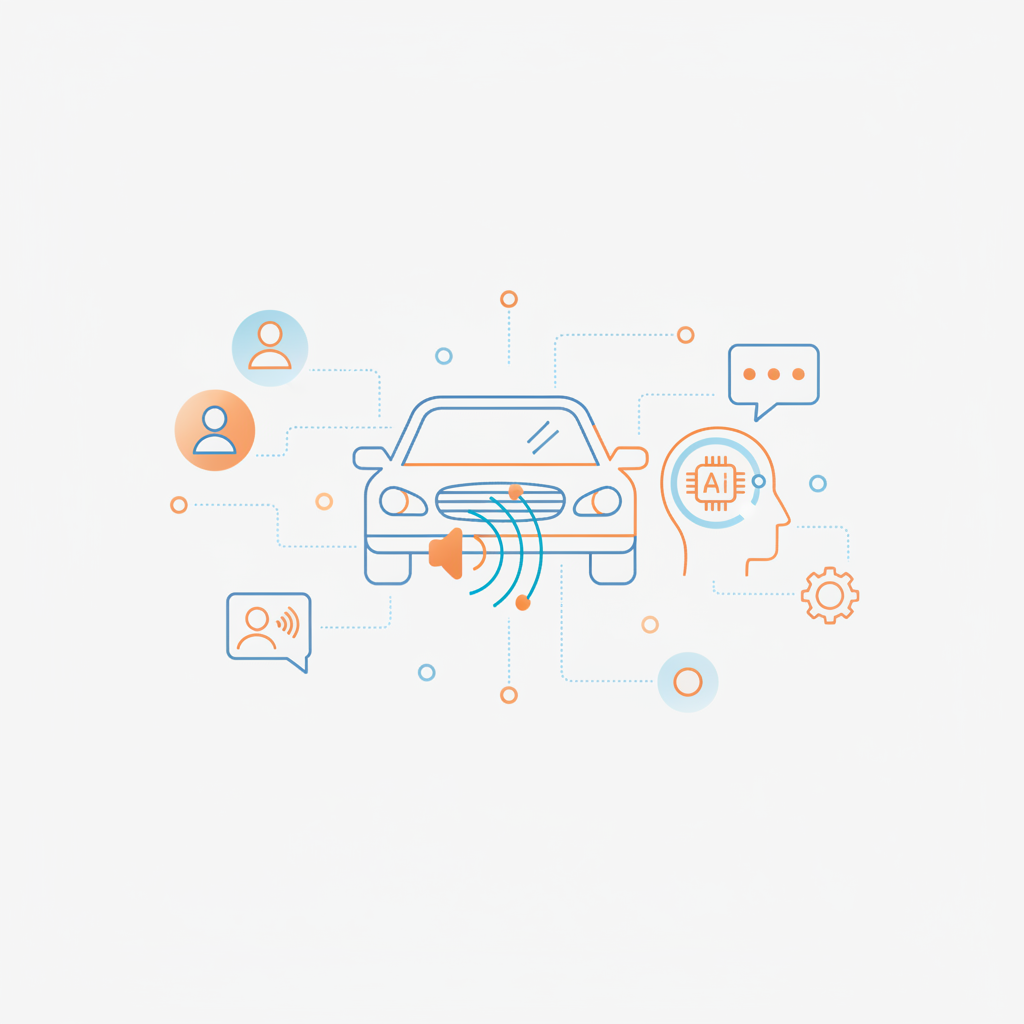
The staffing challenge in dealerships compounds the phone management problem. Service advisors are supposed to be at the service drive greeting customers, inspecting vehicles, and writing repair orders – not sitting at a desk answering phones. Sales consultants should be on the lot working with walk-in customers, not tethered to a phone bank. BDC (Business Development Center) departments were created specifically to handle phone and internet leads, but they are expensive to staff, experience high turnover, and often struggle with inconsistent call quality. Many dealerships have tried outsourced call centers, but the callers quickly detect that the person on the phone has no real knowledge of the specific dealership’s inventory, service capabilities, or personnel. The result is a persistent gap between the volume of calls coming in and the quality of attention each caller receives.
Service Department: Where AI Delivers Immediate ROI
The service department is where AI voice agents deliver the fastest and most measurable return in a dealership setting. Service appointment scheduling alone accounts for a massive portion of daily calls and follows patterns that AI handles exceptionally well. A customer calls to schedule an oil change. The AI checks the service department’s real-time appointment availability, considers the time required for the requested service, asks whether the customer wants to wait or drop off the vehicle, books the appointment, and sends a text confirmation with the date, time, and any preparation instructions. If the customer mentions additional concerns – a strange noise when braking, a check engine light that came on last week – the AI notes these in the appointment record so the service advisor can plan accordingly and ensure the right technician and diagnostic equipment are available.
Repair status calls represent another high-volume category that AI handles beautifully. When a customer calls to ask “is my car ready?” – a question that service departments field dozens of times daily – the AI checks the repair order status in the dealer management system and provides an accurate, real-time update. If the vehicle is still being worked on, the AI can provide an estimated completion time based on the technician’s progress notes. If parts are on order, the AI knows when they are expected to arrive. If the vehicle is ready, the AI provides the total cost, payment options, and available pickup times. This eliminates the frustrating cycle of customers calling repeatedly, getting put on hold while the service advisor walks to the shop to check, and sometimes receiving inaccurate estimates because the advisor was guessing rather than checking.
Recall management is an increasingly important function that AI agents handle with particular effectiveness. When a manufacturer issues a recall, the dealership is responsible for notifying affected customers and scheduling their vehicles for the recall repair. This can involve hundreds or thousands of outbound calls for a single recall campaign, plus a surge of inbound calls from customers who received the manufacturer’s recall notice and want to schedule service. An AI agent can conduct both the outbound notification campaign – calling affected customers, explaining the recall, and scheduling appointments – and handle the inbound surge, all while maintaining a calm, informative tone that keeps customers from panicking about what is often a minor issue.
Sales Department: Qualifying Leads at Scale
On the sales side, AI voice agents serve as an always-available BDC that never takes a day off and never has a bad attitude. When a prospect calls about a vehicle they saw online, the AI can access the dealership’s current inventory in real time and provide specific information about the vehicle including trim level, color, mileage, features, and pricing. It asks qualifying questions that help the sales team prioritize: Is this for personal or business use? Do you have a vehicle to trade in? Are you looking to finance, lease, or pay cash? What is your timeline for purchasing? Have you visited or spoken with any other dealerships? The answers to these questions, captured in structured format in the CRM, allow the sales team to focus their energy on the most qualified prospects rather than treating every call equally.
Test drive scheduling through AI is particularly valuable because it converts interest into commitment. When a prospect expresses interest in a vehicle, the AI immediately offers to schedule a test drive, checks the sales team’s availability, books the appointment, and sends a confirmation with directions to the dealership and a photo of the specific vehicle the prospect will be driving. The reduction in friction from “I’m interested” to “I have an appointment at 2 PM Saturday” is significant – every additional step in the process, every callback required, every moment of delay increases the probability that the prospect will lose momentum or engage with a competing dealership. An AI that can schedule a test drive in the same conversation where the prospect expressed initial interest captures commitments that would otherwise evaporate.
The integration with dealer management systems is essential for all of these functions. The AI needs access to the DMS for real-time inventory data, service scheduling, repair order status, customer history, and parts availability. It needs CRM integration for lead management and follow-up tracking. And it needs access to the service scheduling system for appointment availability and booking. Fortunately, the major DMS platforms – CDK, Reynolds and Reynolds, Dealertrack – all provide APIs that enable this integration, and AI platforms that specialize in automotive have pre-built connectors that significantly reduce deployment time. A dealership can typically go from decision to live deployment in two to four weeks, with the AI handling a meaningful percentage of calls from day one and improving as it learns the dealership’s specific patterns and customer base.
Related Reading
- ההשפעה הגוברת של ישראל בתעשיית נציגי ה-AI הקוליים והמוקדים הטלפוניים
- Israel’s Rising Influence in the AI Voice Agent and Contact Center Industry
- האצת שירות לקוחות: איך סוכני קול AI משנים סוכנויות רכב

